

In one recent procurement discussion, a Korean buyer developing a solid deodorant product asked about ingredients for ammonia, trimethylamine, hydrogen sulfide, methyl mercaptan and acetaldehyde control. The conversation covered cyclodextrin chemistry, zinc ricinoleate, low acyl gellan gum, calcium lactate, sample testing, packaging and chemical logistics. This type of inquiry is common in B2B chemical sourcing because a deodorant formula usually depends on a system of ingredients, not one universal raw material.
1. Start with the Odor Profile, Not the Product Name
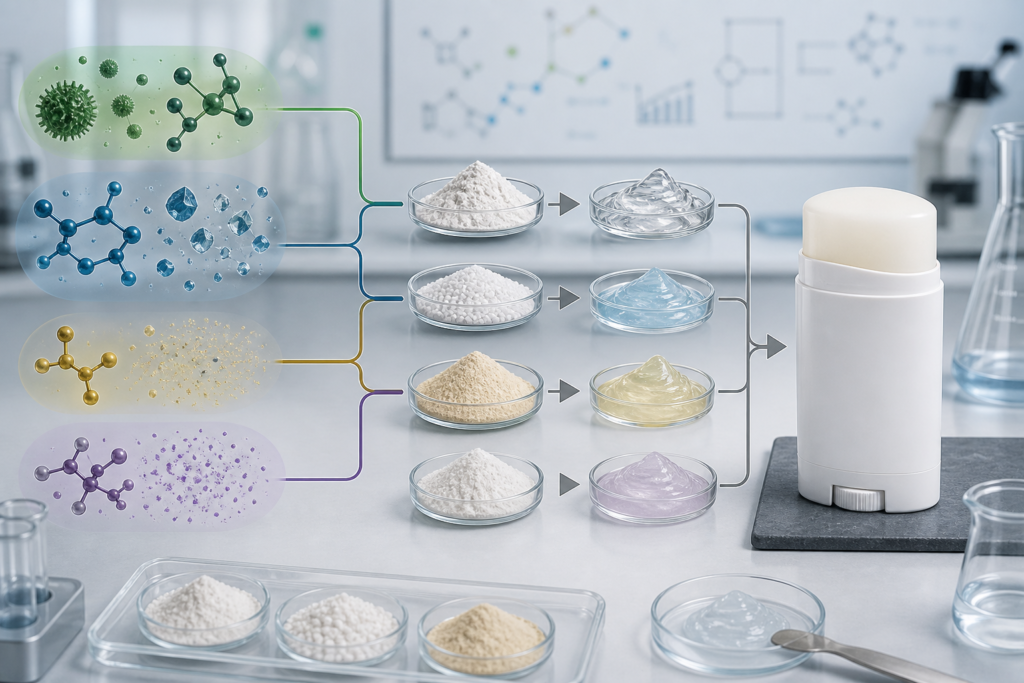
Different malodor molecules behave differently. Amines, sulfur compounds and aldehydes do not necessarily respond to the same ingredient in the same way. Before requesting a quotation, buyers should list the main odor targets and intended application format, such as stick, block, tablet, gel or powder-based solid deodorant.
This step helps the supplier avoid overpromising. It also helps the buyer separate three different questions:
- Which ingredient may interact with specific odor molecules?
- Which ingredient helps build the solid product structure?
- Which tests are needed to verify performance in the buyer’s own formula?
2. Understand the Possible Role of Cyclodextrins Such as HPBCD
Hydroxypropyl-beta-cyclodextrin, often abbreviated as HPBCD, is commonly discussed in odor-related applications because cyclodextrins can form inclusion complexes with suitable organic molecules. Public patent literature on malodor reduction describes the use of water-soluble cyclodextrin in compositions intended to reduce malodor impression on inanimate surfaces. See, for example, US5783544A, “Composition for reducing malodor impression on inanimate surfaces”.
For buyers, the practical takeaway is that HPBCD should be evaluated as one part of an odor-control strategy, especially where the target molecules are suitable for cyclodextrin inclusion behavior. However, it should not be described as a guaranteed solution for all odor types. If the formulation must address ammonia, sulfur compounds and aldehydes at the same time, laboratory testing in the final base system is still necessary.
3. Consider Zinc Ricinoleate When Broader Odor Absorption Is Needed
Zinc ricinoleate is another ingredient often associated with deodorizing systems. Public patent documents describe zinc ricinoleate as an odor-absorbing agent in deodorant or cleaning-related compositions. Relevant examples include EP3670636A1, “Unit dose detergent with zinc ricinoleate” and EP1532990B1, “Deodorizing compositions containing zinc ricinoleate”.
In supplier communication, zinc ricinoleate can be positioned as a candidate ingredient for odor-control formulation work, but the supplier should avoid claiming a fixed deodorization percentage unless a test method, formula, dosage and report are available. For a buyer, the right question is not only “Does this ingredient deodorize?” but also “Under what formula, dosage and test condition was the result measured?”
4. Separate Odor-Control Ingredients from Structure-Building Ingredients
A solid deodorant formula also needs structure. Low acyl gellan gum and calcium lactate may be discussed in this context because low acyl gellan gum is known for forming firm gel structures in the presence of gel-promoting cations such as calcium. Patent literature on modified gellan gum notes that low acyl gellan gums form gels when cooled in the presence of gel-promoting cations, preferably divalent cations such as calcium and magnesium. See US6602996B1, “Modified gellan gum composition process and product”.
This does not mean calcium lactate is automatically the best choice for every deodorant base. It means the buyer can test calcium sources as part of the gelation and texture system. In practice, gel strength, brittleness, water activity, pH, processing temperature and compatibility with other deodorant ingredients should all be checked in the final formulation.
5. Do Not Confuse Raw Material Documents with Finished-Product Test Reports
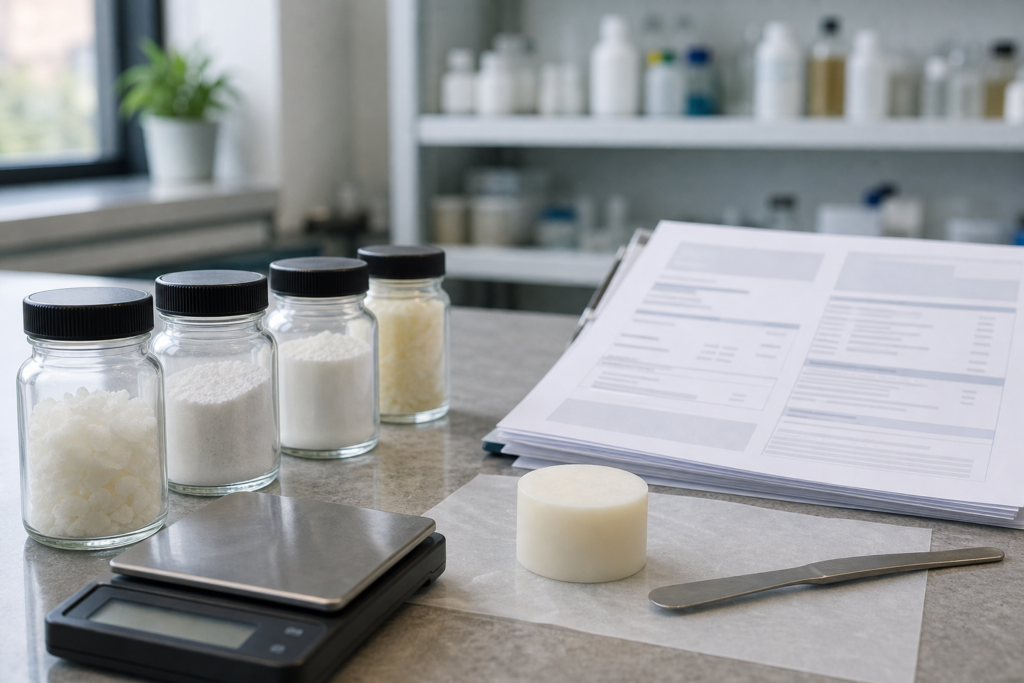
Many buyers ask suppliers for deodorization rate reports. This is understandable, but raw material suppliers often provide COA, TDS or SDS documents rather than finished-product performance reports. A finished deodorant test result depends on the complete formulation, dosage, base material, odor model, exposure time and test method.
For a more efficient sourcing process, buyers can request:
- COA for batch quality reference;
- TDS for product description, appearance and typical specification;
- SDS for safety and handling review;
- sample quantity for internal formulation testing;
- supplier guidance on common application direction, without treating it as a finished formula.
6. Build a Practical Sample Testing Plan
For early-stage solid deodorant development, a sample request can be more useful than a long theoretical discussion. A practical test plan may include:
- Define the target odor molecules and the intended product format.
- Select one or more odor-control candidates such as HPBCD or zinc ricinoleate.
- Select base-structure ingredients such as low acyl gellan gum and a calcium source if a gel-based solid system is being evaluated.
- Request small samples and documents for internal testing.
- Run comparative tests in the buyer’s own formula instead of relying on unrelated finished-product reports.
- Confirm packaging, transport condition and chemical logistics before larger procurement.
7. Supplier Communication Checklist
Before placing a trial order, buyers can use the following checklist to reduce misunderstandings:
| Question | Why It Matters |
|---|---|
| Which odor molecules are the main targets? | Ingredient selection depends on the odor profile. |
| Is the ingredient for odor control or structure building? | HPBCD, zinc ricinoleate, gellan gum and calcium sources may play different roles. |
| Can the supplier provide COA, TDS or SDS? | These documents support quality and handling review, but they are not the same as finished-product test reports. |
| Is a deodorization rate claimed? | Any percentage should be tied to a specific formula and test method. |
| Are samples shipped by normal logistics or special chemical logistics? | Chemical samples may require different documentation and freight arrangements. |
Conclusion
Selecting raw materials for a solid deodorant formulation is not a one-ingredient decision. A reliable sourcing process starts from the odor profile, then separates odor-control ingredients from structure-building ingredients, reviews documents carefully and verifies performance through sample testing.
For buyers developing solid deodorant products, Chemfine can support raw material sourcing discussions around HPBCD, zinc ricinoleate, low acyl gellan gum, calcium lactate and related formulation ingredients. The best next step is to share the target odor profile, application format and desired sample quantity so that the material selection can be discussed more accurately.
CTA: Looking for raw materials for solid deodorant formulation testing? Share your target odor profile and application format with Chemfine to discuss suitable sample options.